

For Every Young Person Who Ever Felt Like the System Wasn't Built for Them
92% engagement. 27,400 students. 54 countries. And the secret is letting young people lead.

TL;DR
1 in 5 young people experience a mental health condition — but for immigrant and minority youth, the barriers go far deeper than access
Dr. Andrew Chang grew up watching peers fall through the cracks of a system that wasn’t designed for them
He founded Nunchi Health in 2022: a peer-led, culturally grounded mental health nonprofit that trains youth to support each other
To date, Nunchi has reached 27,400 students across 54 countries with a 92% engagement rate — 30% higher than traditional therapy – and the waitlist keeps growing
Andrew is a member of the 2026 RIVET Boost Cohort
When the System Doesn’t Feel Built for You
Every May, Mental Health Awareness Month asks us to talk more openly about what so many carry in silence.
But for immigrant and minority youth — navigating new cultures, new languages, and the weight of family expectations alongside everything else — talking openly has never been simple. The stigma runs deep. The system feels foreign. And the faces in the room rarely look like yours.
The mental health crisis isn’t equal. And the solutions built to address it haven’t been either.
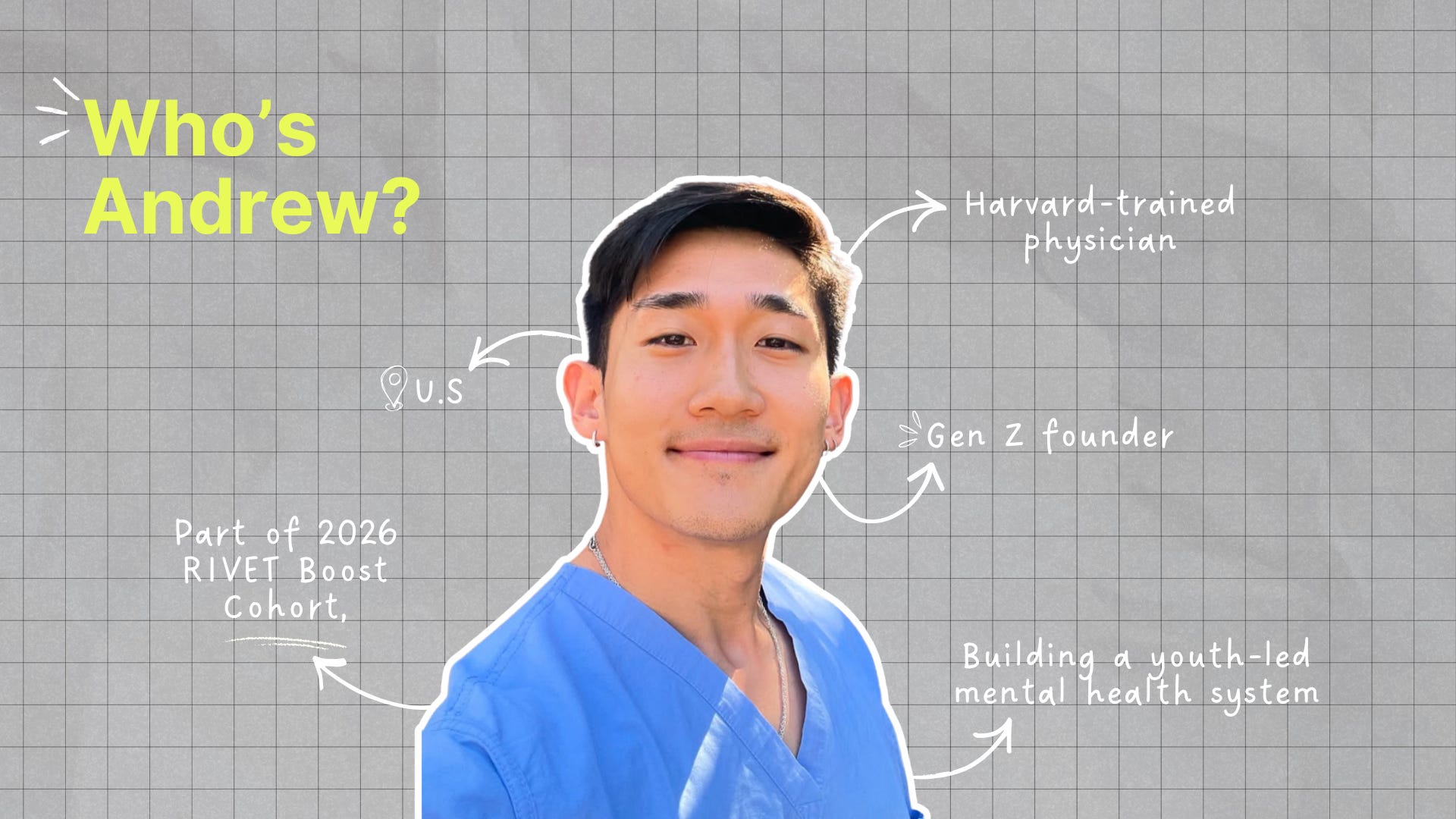
Dr. Andrew Chang has spent his career sitting with this reality. As a Harvard-trained physician in San Mateo County working with underinsured patients who had often been denied care, he kept seeing the same story: young people from immigrant and minority backgrounds falling through the cracks of a system that was never built for them.
He stopped waiting for the system to catch up. In 2022, he founded Nunchi Health.
The Gap Nobody Was Filling
One in five young people will experience a mental health condition. Immigrant and minority youth can face unique barriers to getting the support they need.
Stress from adapting to a new culture. Pressure from your community. Trauma passed down through families. Stigma that makes asking for help feel weak— or worse, like betrayal.
And even when care is accessible, it often doesn’t fit. A therapist who doesn’t share your cultural context. A model built around individual healing for someone whose identity is rooted in community. Sessions that feel clinical when what you actually need is to feel understood.
“A lack of awareness and an enduring stigma perpetuate the wounds experienced by immigrant and cultural minority communities,” says Andrew. “We need to support the mental health of our young people, particularly and especially those from adverse backgrounds.”
The system isn’t failing for lack of effort. It’s failing because it was never designed with these young people in mind.
What Andrew Built Instead
Nunchi Health was born from the belief that no one is more equipped to solve the youth mental health crisis than young people themselves.
It’s a simple inversion — but a big one. Instead of bringing outside expertise into communities, Andrew built a model where communities can heal from within. Where the people most affected by the problem become the ones solving it.
With support from RIVET, he’s been able to take that model further, faster..
“Meaningful change often comes from building trust, understanding cultural context, and empowering others — rather than rushing solutions.” — Dr. Andrew Chang
How Nunchi Health Actually Works
Young people aren’t just the ones being helped here. They’re the ones doing the helping.
Nunchi trains students from immigrant and minority backgrounds in peer support and basic psychotherapy skills. Those students then run healing circles, workshops, and campus programs for their own communities — spaces grounded in cultural identity and shared experience, designed specifically to address the acculturation distress that standard programs don’t touch.
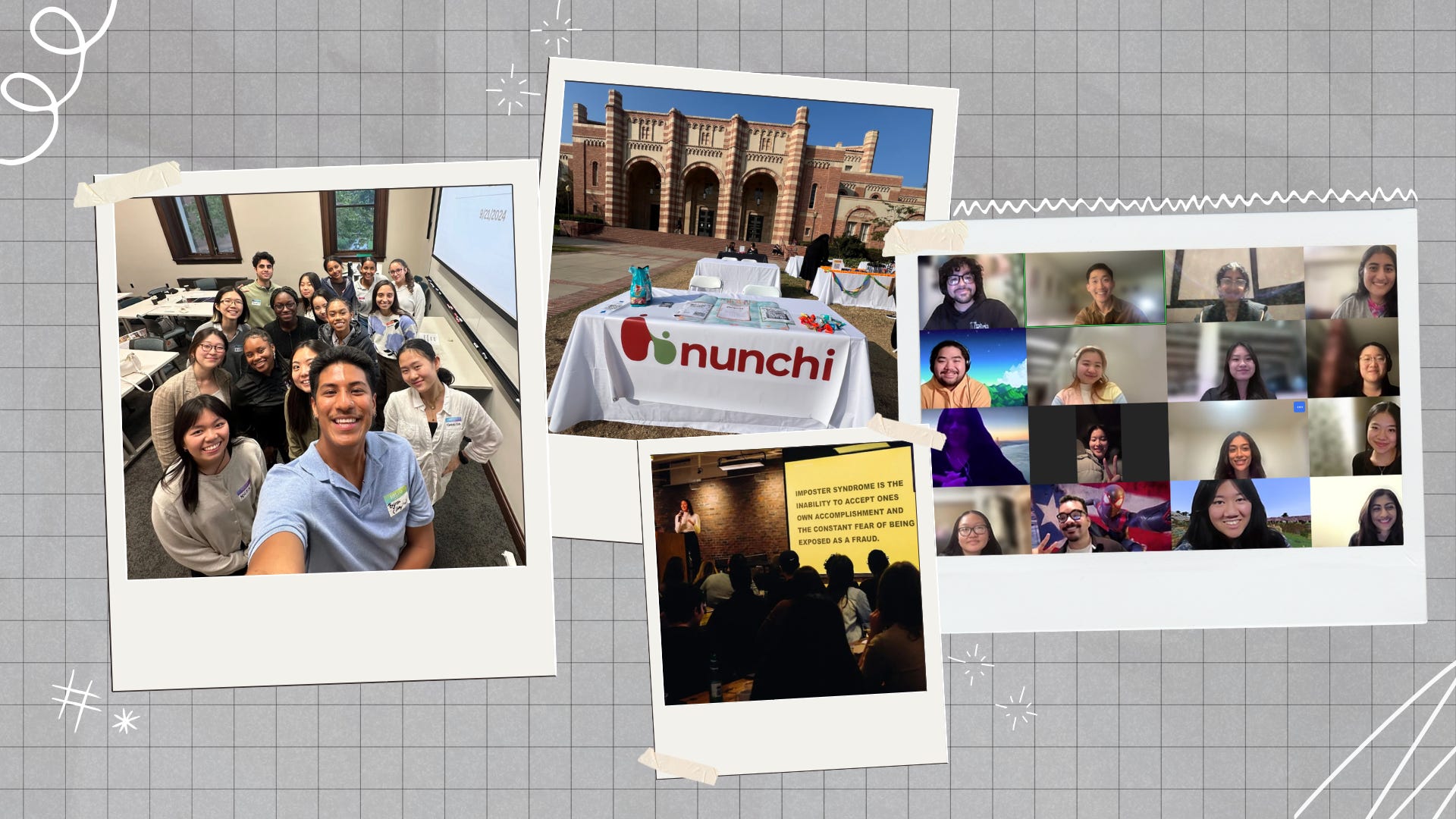
Every program is free and evidence-based, with clinician support behind each session.
And the impact compounds. Over 30% of participants go on to support others themselves — stepping into leadership roles and extending the reach of the program far beyond what any outside intervention could sustain.
The result is mental health support that grows from within communities — not one that arrives from outside them.
The Proof
27,400 students reached. 54 countries. 4,897 mental health sessions delivered.
A 92% engagement rate — 30% higher than average psychotherapy sessions.
Over 30% of participants have stepped into peer leadership roles themselves. A 15% reduction in anxiety. A 10% improvement in self-rated mental health. And a waitlist of 500+ students who want in.
The people inside the rooms say it best.
“Nunchi was an incredibly powerful experience. We left this community with an unbreakable bond.”
“This program changed my life. I finally felt understood.”
That last line — I finally felt understood — is the whole point. Feeling understood isn’t a nice-to-have in mental health care. For so many of these young people, it’s the thing they’ve never had.
Where This Is Headed
After receiving a RIVET Access Grant to help support his Nunchi Health project, Andrew was selected for the 2026 RIVET Boost Cohort — RIVET’s follow-on program for mid-stage youth-led ventures ready to scale. For Nunchi Health, that means stronger infrastructure, expanded reach, and a faster path to the 500+ students still waiting.
This Mental Health Awareness Month, that momentum couldn’t be more meaningful. Because the conversation we really need isn’t just about being more open — it’s about building systems that actually work for the young people who’ve been left out of them.
Nunchi Health is building one of those systems. And we get to watch it grow.
The Bigger Picture
Here’s what Andrew’s model shows: the communities most overlooked by the mental health system aren’t lacking strength. They’re lacking a system that sees it.
Nunchi doesn’t import healing. It builds the conditions for communities to heal themselves — with young people as the architects, not just the recipients.
That’s what youth-powered mental health looks like when it actually works. Not a program. A movement.
And it’s just getting started.
Get Involved
Support The Next Generation of Peer Mental Health Advocates
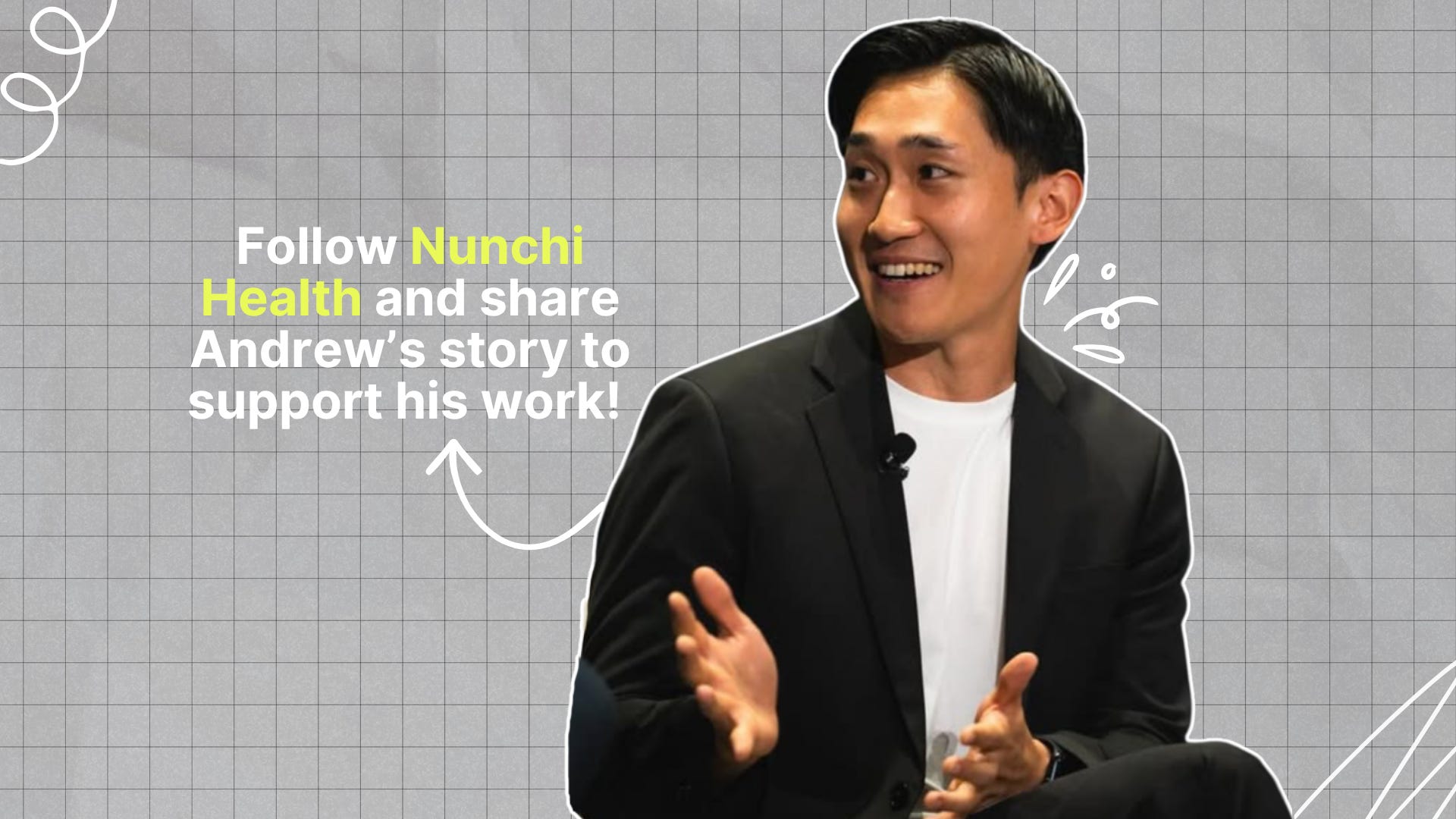
If this changed how you think about what mental health support can look like — share it with someone who needs to see it. Young people are building real solutions, and the more people who know that, the better.